


Bifold doors and sliding doors do different things well. Choosing the wrong one is an expensive mistake that is difficult to fix without replacing the frame. This guide runs through every dimension that matters from the perspective of someone who measures, orders and fits both across London.
The key difference in one sentence
nnn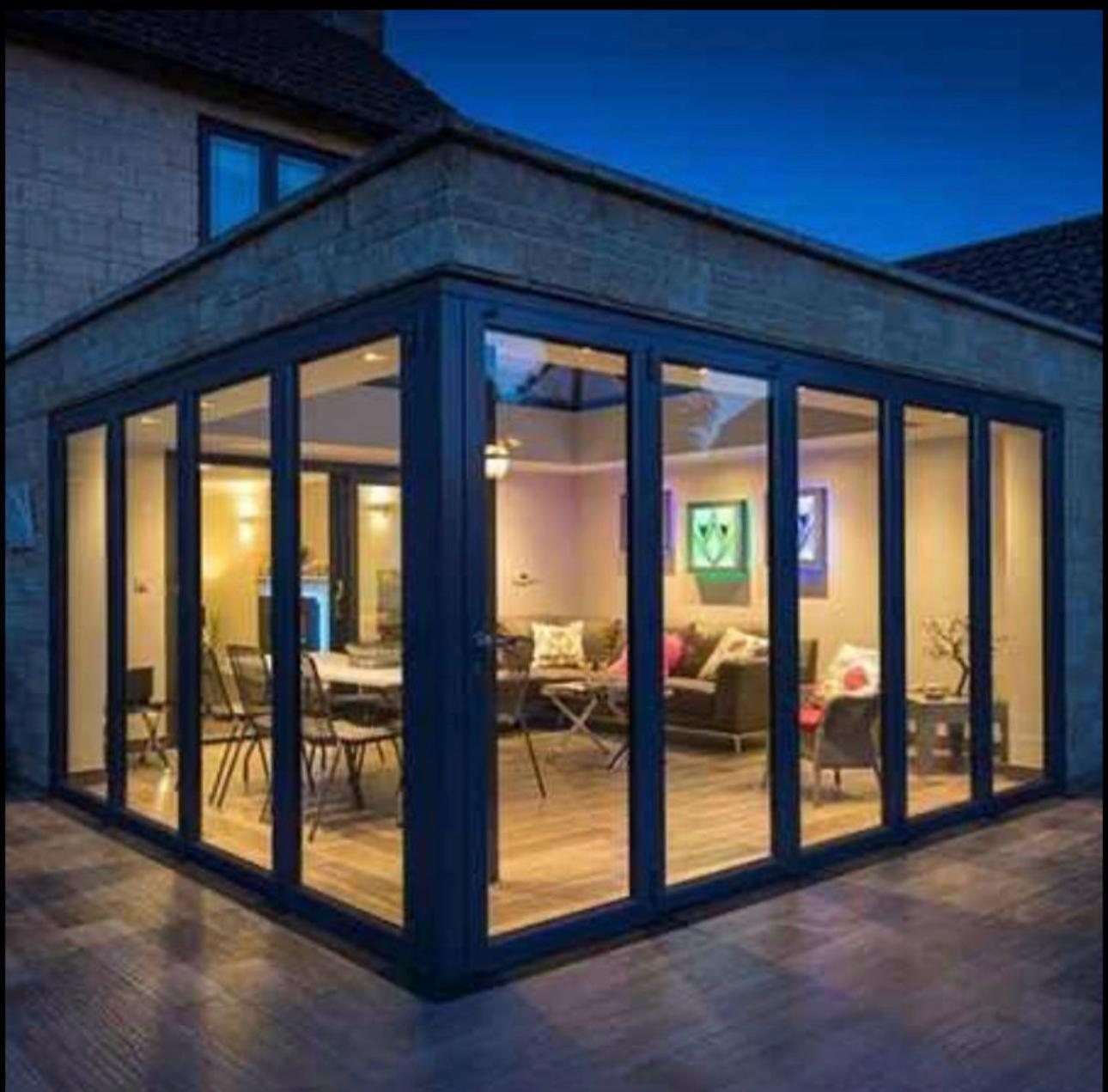
Bifold doors fold and stack to clear the full opening. Sliding doors move laterally but always leave at least one panel covering part of the opening. For the same frame size, bifolds give you more usable clear gap when open. Sliding doors give you a better uninterrupted view when closed.
Side-by-side comparison
| Bifold doors | Sliding doors | |
|---|---|---|
| Clear opening when fully open | Up to 90% of the frame width | 50% of the frame width (one panel always overlaps) |
| View when closed | Interrupted by fold lines between panels | One or two clean panes, minimal interruption |
| Space needed outside | Panels swing out 150 to 200mm when opening | None — panels slide within the frame |
| Space needed inside (inward fold) | One panel width clear of the door | None |
| Minimum opening width | Around 1.8m (3 panels) | Around 1.5m (2 panels) |
| Maximum practical width | Around 6m before engineering gets complex | 8m or more with multi-panel track systems |
| Frame sightlines | More vertical lines (one per panel) | Fewer lines — cleaner elevation |
| Weather sealing | Good with quality threshold; exposed fold hardware in heavy rain | Slightly better — fewer moving joints to seal |
| Security | Multi-point locking standard; PAS 24 available | Multi-point locking standard; PAS 24 available |
| Upfront cost (aluminium, London) | Higher per m² — more panels, more hardware | Lower per m² for equivalent opening width |
| Maintenance | Track and rollers need occasional cleaning; fold seals checked annually | Track and rollers need occasional cleaning |
When bifold doors are the right choice
Choose bifolds when the primary goal is opening the room completely to the garden. For a kitchen or living room that hosts people during summer, a bifold door that disappears to one side creates an indoor-outdoor flow that a sliding door simply cannot match at the same frame width.
Bifolds also suit openings between 2m and 5m where you want to use the full width. Below 2m, a wide single door is usually better value. Above 5m, the number of panels becomes unwieldy and the engineering gets expensive.
The other case for bifolds is a property where the opening is in a corner or against a wall that limits how far a sliding panel can travel laterally. Bifolds stack tight; sliding doors need a run of wall to park on.
When sliding doors are the right choice
Choose sliding doors when the view matters as much as the opening. A large garden or a view across the rear of the property looks significantly better through two clean panes of glass than through three or four panels with fold lines between them.
Sliding doors are also the right call for wide openings above 5m or 6m. The track system scales more cleanly than adding bifold panels, and the hardware is less exposed to weather on a very wide span.
If space outside is restricted — a small terrace, a raised deck with no room for the panels to swing — sliding doors avoid the problem entirely. They open without projecting beyond the frame.
London flats and ground-floor maisonettes with limited rear access are a natural fit for sliding doors for this reason.
Opening size in practice
This is the most misunderstood point. A 3.6m bifold door opened fully gives you around 3.2m of clear gap to walk through. A 3.6m two-panel sliding door gives you 1.8m — half the frame, which is how much you get regardless of how wide the frame is.
If you are entertaining in the summer and want guests to move freely between inside and outside, that difference matters. If you want to open a window to the garden on a warm afternoon and step out occasionally, it does not.
Cost difference
For the same opening width in aluminium, bifold doors typically cost 15 to 25% more than sliding doors. The gap comes from the number of panels (and therefore hinges, seals and hardware sets) and the more complex folding mechanism. A 3m aluminium bifold in London sits in a different bracket from a 3m aluminium sliding door of equivalent quality.
Neither is cheap. Both are significantly more expensive than a standard French door or patio door, and both should last 40 years or more in aluminium with no meaningful maintenance beyond track cleaning.
Frequently asked questions
Can I replace my existing bifold doors with sliding doors, or the other way around?
In most cases yes, but the frame opening will need to be measured and possibly adjusted, and the lintel above needs to be checked for the new span. The floor track positions are different for the two systems. We treat these as a new installation rather than a simple swap, and quote them accordingly.
Are sliding doors harder to break in through than bifolds?
Both can be specified to PAS 24, the UK standard for security-tested windows and doors. The hardware matters more than the door type. We confirm PAS 24 compliance at survey for any installation where it is requested or where the opening is a likely access point.
Do sliding doors let in more draughts than bifolds?
A well-specified sliding door seals slightly better than a well-specified bifold because it has fewer panel joints. In practice the difference in thermal performance between two quality aluminium systems with equivalent glass is small. The glass specification — double vs triple glazed, low-E coating, argon fill — matters far more than the door type.
Which takes longer to install?
Both are typically one to two days on site for a standard residential opening. Sliding doors with a buried floor track take slightly longer if the floor needs cutting. Bifolds with a low or flush threshold also add time to get the floor level right. Lead time from order to installation is similar for both — around 10 working days from confirmed order.
See also: bifold doors London, aluminium sliding patio doors London, how to choose bifold doors, bifold door costs, and recent installations across London.